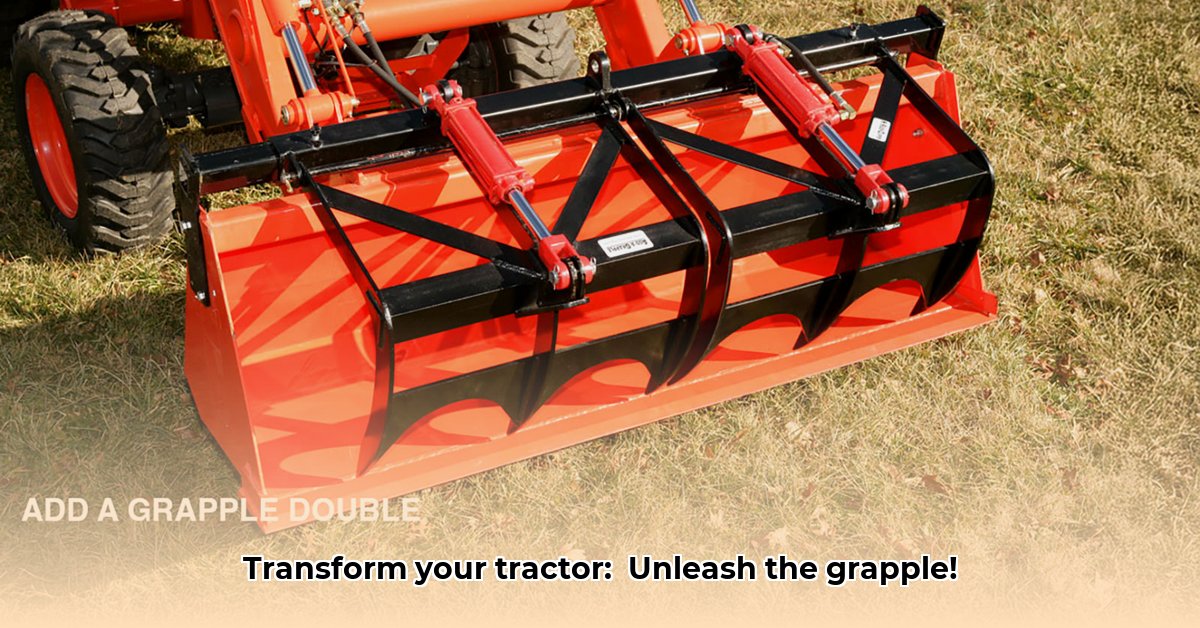
Choosing the Right Bolt-On Grapple for Your Tractor
Boosting farm efficiency often hinges on the right tools. A bolt-on grapple for your tractor bucket significantly improves material handling, but selecting the correct one requires careful consideration. This guide provides a step-by-step approach to choosing, installing, and maintaining your grapple, maximizing its efficiency and lifespan. For more detailed information on grapple selection, check out this helpful resource: grapple selection guide.
Sizing Your Grapple: A Crucial First Step
Selecting a grapple is similar to choosing work gloves – the right size is paramount for optimal performance and safety. A grapple too small for your bucket will overwork the system, potentially causing damage or accidents. A grapple too large will be unwieldy and inefficient. Precise measurement is key.
To determine the appropriate size, measure your bucket's width at its widest point. Use the following table as a guideline. Remember to always cross-reference with the manufacturer’s specifications for your specific tractor and bucket model. Improper sizing can lead to serious safety hazards.
| Bucket Width (inches) | Recommended Grapple Size | Typical Applications |
|---|---|---|
| 36-48 | Mini | Small tractors, light-duty tasks (brush, small debris) |
| 48-60 | Small | Medium-duty tasks (pallets, logs, larger debris) |
| 60-72 | Standard | Most applications (hay bales, larger materials) |
| 72+ | Large/Heavy-Duty | Large tractors, heavy materials (large rocks, etc.) |
(Diagram showing proper measurement points on a tractor bucket would be included here.)
Have you ever experienced a grapple that was mismatched for the job? What were the repercussions? Sharing your experiences helps others avoid similar mistakes.
Understanding Your Grapple's Components
Let's examine the key components of a bolt-on grapple:
Jaws: These are the gripping mechanism; their strength determines the material weight you can safely handle. Stronger jaws are needed for heavier materials, such as rocks or large logs.
Hydraulic System: This is the power source, comprising hydraulic cylinders (creating the gripping force), hoses, fittings, and a control valve (in your tractor cab) managing hydraulic fluid flow.
Mounting Brackets: These connect the grapple to your bucket, requiring a precise fit for secure attachment and proper grapple function.
A Common Pitfall: Many grapple kits omit essential components like hydraulic hoses and fittings, requiring separate purchase. Inconsistent fittings are a frequent source of problems. "I spent hours trying to find the right fittings," says John Miller, a farmer from Iowa. “The manufacturer’s instructions were too vague.” Always ensure compatible components. If unsure, seek professional guidance. This added cost can impact the overall project budget. Did you experience similar difficulties?
Step-by-Step Installation: A Practical Guide
Installation steps may vary; always consult your manufacturer’s instructions. Safety precautions are paramount.
Step 1: Preparation. Gather tools, components (including any supplemental hoses and fittings), and the manufacturer’s manual. A helper is recommended.
Step 2: Bracket Attachment. Securely attach mounting brackets to the bucket; avoid over-tightening.
Step 3: Hydraulic Connection. Carefully connect hydraulic hoses to the grapple and your tractor’s system. Double-check for leaks. If you are unsure about this step, a professional should be consulted to prevent failures.
Step 4: Testing and Adjustment. Test the grapple’s functionality, addressing any leaks or operational issues.
(High-quality photos or a video demonstrating the installation process should be included here.)
Grapple Compatibility Across Tractor Brands and Models
Compatibility is crucial. A grapple designed for a John Deere tractor may not fit a Kubota, regardless of bucket size. Always check the manufacturer's compatibility chart. A cross-reference chart detailing compatibility across various tractor brands would be beneficial here.
(A detailed cross-reference chart should be included here.)
Maintenance and Durability: Extending Grapple Lifespan
Regular maintenance is key:
- Lubricate moving parts
- Inspect for damage
- Replace worn components promptly
Long-term durability data remains limited. Your feedback is valuable: Share maintenance routines and experiences to contribute to a broader understanding.
User Reviews: Real-World Experiences
Many users praise the grapple's versatility and ease of use when properly installed. However, missing components and vague instructions are recurring concerns. Manufacturers should include all necessary parts and provide clear, detailed installation instructions.
Conclusion
A bolt-on grapple significantly improves farm efficiency. Careful selection, proper installation, and regular maintenance are key to maximizing its value. Share your experiences in the comments section.